
In the printing industry, screen cell volume (screen cell volume / ink capacity) refers to the total volume of ink that can be accommodated by all microscopic screen cells per unit area on the surface of the screen roller (screen roller/sleeve).
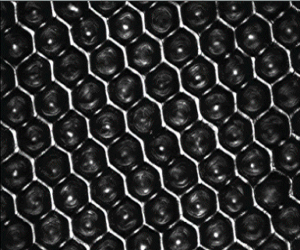
It determines that the ink thickness (ink film thickness), color penetration, and pattern resolution are the most critical physical parameters. If the cell volume is selected incorrectly – resulting in colors that are not sufficiently light (due to an excessively small cell volume) – the printed image will appear blurred (due to an appropriately sized cell volume).

- Cell Volume Measurement (Unit-Dominant System)
In the global printing industry, the following two units are primarily used, depending on the region or local practice.
These units can be converted into one another:BCM (or BCM/in²) -Commonly used in North America and Taiwan
Full name: Billion Cubic Microns per Square Inch (10⁹ cubic microns per square inch).
Numerical value: A fractional value indicating the higher the ink load on the screen printing roller. For example, 3.5 BCM means that the total screen ink capacity per square inch is 3.5 billion cubic micrometers.
- The relationship between(LPI) and the 60° grid aperture
The cell area does not exist in isolation; it is intricately linked to the 60° grid pattern (cell shape) and the line density (LPI – lines per inch) you mentioned earlier:
The conflict between large volume and high LPI: When the LPI is high, it indicates a denser array of mesh apertures per unit area with smaller aperture sizes. As the apertures become smaller, their depth cannot be too great (otherwise, the fountain pen would fail to reach the bottom layer of ink, causing the ink to dry out inside). Therefore, generally speaking, the lower the LPI value, the smaller the unit volume will be.
The advantage of 60-degree honeycomb mesh apertures: At the same mesh count (LPI), 60-degree honeycomb apertures offer the highest spatial utilization; as a result, their cell volume can be larger than that of traditional 45-degree apertures, and ink release is more seamless.
- How to select Cell Volume based on the printed pattern?
Different printed products require significantly varying amounts of ink. Below is a commonly used industry reference (taking flexographic printing as an example):
| Printing Type | Recommended Cell Volume (BCM) | Recommended cable length (LPI) | explain |
| Solid / Opaque White | 5.0 ~ 12.0+ | 200 ~ 400 | High coverage is required; therefore, a thick layer of ink must be applied. |
| Gross Text / Lines (Text & Line) | 3.5 ~ 5.5 | 400 ~ 600 | Balance the clarity of lines with the saturation of colors. |
| Color dots / Halftone | 1.8 ~ 3.5 | 700 ~ 1200+ | When printing high-resolution four-color figures or landscapes, the image area must be small; otherwise, dot gain will occur. |
| Varnishing / Coating | 6.0 ~ 15.0+ | 160 ~ 300 | Applying varnish or special adhesives requires a large volume. |
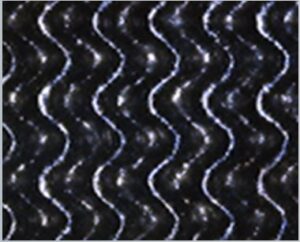
- Why does Cell Volume change? (Critical Maintenance)
The Anilox Sleeve has a fixed cell volume at the time of factory delivery. However, during actual production, this volume may decrease due to the following reasons, resulting in faded printing colors:
Ink plugging: If water-based or UV ink is not cleaned promptly, it may form clumps at the bottom of the 60°C screen mesh, thereby occupying volume.
Ceramic wear: Prolonged friction with the ink scraper causes the mesh wall of the mesh pores to thin, leading to a permanent reduction in volume.