Rollers and shafts
of the printing machine

分类
未分类

Addressing the challenges associated with secondary coating of decorative paper It all starts with a “sturdy” mesh roller.

In the decorative paper impregnation process, secondary coating demands exceptional precision. Conventional screen rollers frequently encounter two major issues: thin screen walls that are prone to scratching, resulting in uneven coating and frequent production stoppages.

Today, HERZPACK has introduced a high-capacity, highly durable direct-embossed coated mesh roller specifically designed for decorative paper impregnation machines, effectively addressing operational challenges in equipment operation.

Core Performance Overview:

  • Extravagant coating capacity: The mesh cable achieves a capacity of 10 LPC with a mesh cell volume up to 120 CC, perfectly meeting the requirements for high coating volumes in secondary coating applications.
  • Direct carving technique with ultra-thick mesh walls: breaking away from traditional carving methods.

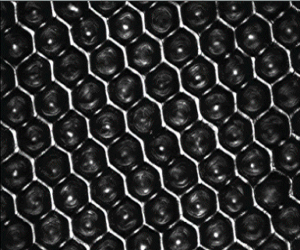
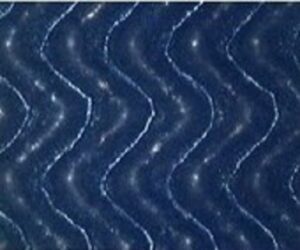
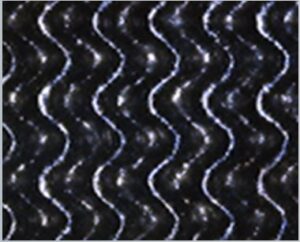
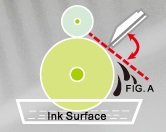
    Conventional embossed mesh walls are extremely thin (indicated by the red arrow) and highly susceptible to wear. Our HERZPACK employs direct embossing technology to produce thicker, more durable mesh walls, completely eliminating the issue of scratch damage to the mesh cells and significantly extending their service life.
  • High-speed operation ensures smoother scraping performance: The top surface of the grid wall in the direct engraving process features a ceramic layer that has been originally ground and polished, resulting in an exceptionally smooth surface. During high-speed operation, the scraper adheres more smoothly, significantly reducing friction noise while substantially extending its service life.
  •  

    Recommendation: Given the deep cavity (120 CC), using a ceramic spatula is recommended to further reduce wear and ensure consistent coating coverage.

    Standard laser-engraved mesh cavities (with thin mesh walls and an uneven top surface)

    The red arrow indicates the damaged area of the conventionally carved thin mesh wall (clear contrast visible).

    Direct carving technique results in thicker mesh walls and smoother mesh pores.

    If you’re also experiencing “insufficient coating amount” or “severe spatula wear” during decorative paper coating, feel free to leave a comment and discuss with us!

分类
未分类

Skills of using ceramic anilox roller

Ceramic anilox roller is made of high temperature resistant and wear-resistant layered material, which is carved according to certain density, depth and angle, so its production cost is also high. If used correctly, the service life can be prolonged to several years, otherwise it will be shortened. Therefore, what are the tips when using ceramic anilox rollers?

In the process of use, the position of a certain anilox roller on the printing press depends on the specific printing piece. The position of the anilox roller varies with different printing pieces. Therefore, it is often necessary to replace the anilox roller during printing.

The second trick is that the current narrow frame machine mostly uses solid steel anilox roller, which is very heavy. When installing the anilox roller, pay attention to avoid touching the surface cover of the anilox roller with other metal objects. Because the ceramic coating is very thin, it is easy to cause permanent damage after collision.

Third, in the process of printing and cleaning the machine, it is necessary to avoid the ink drying on the anilox roller. The special detergent recommended by the water-based ink manufacturer should be used, and the stainless steel brush should be used to clean and thoroughly clean. And develop the habit of often using a high-power magnifying glass to observe the net hole of the anilox roller. Once the ink is found to deposit on the bottom of the net hole and there is a trend of gradual increase, it should be cleaned in time. If the above methods are not effective, ultrasonic or sand blasting can be used, but it must be carried out under the guidance of the roller manufacturer.

In short, whether it is ceramic anilox roller, mirror roller or other, their correct operation and use are particularly important, only in this way, can its service life be extended, and the cost can be saved for enterprises. If you understand the above ceramic anilox roller using skills, I believe your work efficiency will be higher, the effect will be better.

分类
未分类

Introduction and use specification of anilox sleeve

Features of anilox sleeve

In addition to the outstanding advantages of quick replacement and high efficiency, the anilox sleeve also has the advantages of simple operation, light weight, low transportation costs, and suitable for small batch orders.

  1. The emergence of anilox sleeve will further shorten the adjustment time when changing jobs, especially in the situation where the proportion of small batches of short-plate jobs is increasing, it is extremely important to compress non-productive preparation time.
  2. The anilox sleeve is made of special composite materials. The inner wall of the sleeve is highly smooth, and the processing accuracy of the cells and the ink transfer performance meet the printing requirements. It is light, durable and not easy to damage. Due to the increase of the width of flexo printing, commonly used ceramic anilox rollers often have difficulties and unsafe problems in handling, loading and unloading, and anilox sleeve can well avoid this problem.
  3. The inner layer of both ends of the anilox sleeve is equipped with an edge protection ring, which plays a role of protection and stability, is convenient for handling, and prevents its eccentric deformation. At the same time, a mark can be attached to identify the number of mesh lines to be correct. Choose.

Installation and disassembly of anilox sleeve

Improper installation and disassembly can easily cause deformation and damage to the anilox roller and reduce the service life:

  1. When installing and dismantling, ensure sufficient air flow, usually the air pressure needs to be above 6Kg/cm2.
  2. When installing and dismantling, two people are required to cooperate. The two people separate the two sides of the anilox sleeve, cooperate to support the anilox sleeve,and insert/draw out the anilox sleeve straightly. If the installation or disassembly is not smooth, it is strictly forbidden to go up and down shake or tap with a hammer to try to increase the air pressure and air flow. Shaking will cause the anilox sleeve to deform, which will affect the run-out accuracy in the slightest, and cause cracks and bulges on the sleeve surface in severe cases; knocking will cause the edge ceramics to fall off, affecting the use.
  3. When using, pay attention to avoid ink flowing into the gap between the air shaft and the anilox sleeve, so that the anilox sleeve and the air shaft are glued together, making it difficult to disassemble. In case of ink infiltration, disassemble and clean it in time after stopping the machine.
分类
未分类

Introduction to flexo printing

What is flexo printing

Flexo printing is a kind of letterpress printing process, called flexo printing, which uses a flexo printing plate and pre-coats ink with an anilox roller. The graphic part of the flexo printing plate is different. During printing, the anilox roller evenly coats a certain thickness of ink layer on the graphic part of the printing plate, and then under the action of the pressure of the pressure roller, the ink layer of the graphic part is transferred to the surface of the substrate to form a graphic.

Flexo printing is named because it was originally used to print corrugated cardboard with a very uneven surface, requiring the surface of the printing plate to be in contact with the cardboard, so it should have good flexibility. Moreover, the unprinted high points on the cardboard must not be printed with the residual ink on the printing plate, which requires the non-graphic part of the printing plate to have sufficient depth to meet this requirement.

The development history of flexo printing

The first flexo printing was very shoddy. After the mid-1970s, due to the progress of the material industry, especially the advent of polymer resin plates and ceramic anilox rollers, the development of flexo printing has made a qualitative leap. It has become the fastest-growing printing method in the world, and great progress has been made in both the manufacturing technology of printing machines and the application technology of flexo printing.

Most of the commodity packaging seen on the market today is almost flexo printing products. The market share of flexo printing accounts for 70% in the field of flexible packaging printing; 85% in the field of label printing; 98% in the field of corrugated printing; 25% in the field of carton printing. These figures are enough to prove the vitality of flexo printing.


Features and advantages of flexo printing

  • The printing ink is a low-viscosity volatile drying ink with alcohol and water as the main solvent. It has a fast drying speed and is suitable for high-speed multi-color printing in flexo printing. The application of non-polluting, fast-drying water-based ink is extremely beneficial to environmental protection.
  • The flexo plate is a photosensitive rubber or resin printing plate, which is soft, bendable and elastic. The Shore hardness is generally 25~60, and it has good transfer performance to printing ink, especially to alcohol solvent printing ink.
  • The printing materials for flexo printing are very wide. Flexo printing can accommodate a variety of different materials, such as paper, aluminum foil, film, etc., which is very suitable for the needs of the packaging printing field.
  • Good print quality. Due to the high-quality resin plate, ceramic anilox roller and other materials, the printing accuracy has reached 175LPI, and it has a full ink layer thickness, which makes the product rich in layers and bright in color. It has the clarity of letterpress printing, the soft color of offset printing, and the thick and high gloss of gravure printing.
  • High productivity. Flexo printing equipment usually uses roll-type materials, which can be completed in one continuous operation from double-sided multi-color printing to glazing, lamination, bronzing, die-cutting, waste discharge, winding or slitting. Therefore, flexo printing can greatly shorten the printing cycle, reduce costs, and enable users to take advantage of the highly competitive market.
  • Easy to operate and maintain. The printing machine adopts the anilox roller inking system, which saves the complex inking mechanism compared with the offset printing machine, so that the operation and maintenance of the printing machine are greatly simplified, and the inking control and response are more rapid. In addition, printing machines are generally equipped with a set of printing plate cylinders that can adapt to different printing repeat lengths, especially for packaging printed products whose specifications are often changed.
  • High printing speed. The printing speed is generally 1.5 to 2 times that of offset printing machines and gravure printing machines, realizing high-speed multi-color printing.
  • Low investment, high income. The modern flexo printing machine has the advantages of short ink transfer route, few ink transfer parts, and extremely light printing pressure of the flexo printing machine, which makes the structure of the flexo printing machine simple and saves a lot of materials used for processing. Therefore, the investment of the machine is much lower than that of the offset printing machine of the same color group, and it is only 30%~50% of the investment of the gravure printing machine of the same color group.

The Future of Flexo printing

With the development of digital printing technology and the increasing demand of consumers for environmental protection and high-quality packaging, flexo printing still has a large room for development in the future. At the same time, the emergence of various new materials will also provide a broader application field for the development of flexo printing technology.

分类
未分类

Performance comparison of chrome anilox roller and ceramic anilox roller


In the current flexo printing field, chrome anilox rollers are gradually replaced by ceramic anilox rollers. The former is economical and the latter is durable. In this article, we do not consider the price factor, but only compare from the performance point of view.

1.Hardness

The coating thickness of chrome-plated anilox roller is generally between 0.01 and 0.15, and the hardness is about Hv900. the coating thickness of the ceramic anilox roller is between 0.1-0.5 (excluding the thickness of the bonding coating),Its hardness reaches Hv1300-1400,the difference in hardness reveals that the anilox roller with higher hardness has more advantages in wear resistance.After data collection, the service life of the latter is 4-5 times longer than that of the former.

2.Coaxiality

The coaxiality of the chrome anilox roller is about 0.05mm, and the data of the ceramic anilox roller is not more than 0.03mm. although from the data point of view, the difference is not big, but if it is enlarged on the anilox roller with a diameter of 50 mm and a length of 1700 mm, there is still a big difference in mechanical runout. mechanical beating will cause ink throwing or uneven ink layer during printing.

3.Engraving precision

Mechanically engraved chrome anilox roll up to 500L/in, Laser engraved ceramic anilox roll up to 1500L/in. high screen ruling can form a thinner and more uniform ink film, reduce the expansion of ink dots during high-speed printing, and obtain faster drying speed, more accurate overprinting and less ink consumption to ensure printing quality.

The above is the main performance comparison between chrome-plated anilox roll and ceramic anilox roll.

分类
未分类

Advantage and usage specification of anilox sleeve

Features of  anilox sleeve

In addition to the outstanding advantages of quick replacement and high efficiency, the anilox sleeve also has the advantages of simple operation, light weight, low transportation costs, and suitable for small batch orders:

     1. The emergence of anilox sleeve will further shorten the adjustment time when changing orders, especially in the situation where the proportion of small batch orders is increasing, it is extremely important to compress non-productive preparation time.

     2. The anilox sleeve is made of special composite materials. The inner wall of the sleeve is highly smooth, and the processing accuracy of the cells and the ink transfer performance meet the printing requirements. It is light, durable and not easy to damage. Due to the increase of flexo printing width, ceramic anilox rollers often have difficulties and unsafe problems in handling, loading and unloading, and anilox sleeves can well avoid this problem.

     3. The inner layer of both ends of the anilox sleeve is equipped with edge protection rings, which play a protective and stable role, which is convenient for handling and prevents eccentric deformation. At the same time, marks can be attached to identify the number of mesh lines to choose correctly.

Installation and disassembly of anilox sleeve

    Improper installation and disassembly can easily cause deformation and damage to the anilox sleeve and reduce the service life:

    1. When installing and dismantling, ensure sufficient air flow, usually the air pressure needs to be above 6Kg/cm².

    2. When installing and dismantling, two people are required to cooperate. The two people separate the two sides of the anilox sleeve, cooperate to support the sleeve, and insert/draw out the anilox sleeve straightly. If the installation or disassembly is not smooth, it is strictly forbidden to go up and down Shake or tap with a hammer to try to increase the air pressure and air flow. Shaking will cause the sleeve to deform, which will affect the run-out accuracy in the slightest, and cause cracks and bulges on the sleeve surface in severe cases; knocking will cause the edge ceramics to fall off, affecting the use.

    3. Pay attention to check the ink blocking block during use to prevent ink from flowing into the joint between the shaft and the sleeve, so that the sleeve and the shaft are glued together, making it difficult to disassemble. In case of ink infiltration, disassemble and clean it in time after stopping the machine.

分类
未分类

Four methods commonly used for ceramic anilox roller cleaning


  In the work of the ceramic anilox roller, if it is not cleaned regularly, even the best ceramic anilox roller will encounter the problem of poor use effect, and the correct cleaning method can improve the use effect of the ceramic anilox roller. We will share with you four cleaning methods as reference.

1. Manual cleaning method

  Apply the cleaning agent to the surface of the anilox roller, and the chrome-plated metal anilox roller should be cleaned with a copper wire brush; while the ceramic anilox roller must be cleaned with a steel wire brush.

  This type of cleaning method is more convenient and will not cause pollution, but if the cleaning is not thorough, it will affect the ink transfer effect. It is generally suitable for anilox rolls with low screen lines or not very dirty anilox rolls.

2. Strong corrosion chemical cleaning method

  Spread the corrosive cleaning agent (usually alkaline solution) evenly on the surface of the anilox roller, if necessary, wrap a layer of plastic products on the surface of the anilox roller to prevent the volatilization of the liquid, ablate the anilox roller for 1~48 hours, wait for After the cured ink is fully softened, clean the anilox roller with water or alcohol liquid (do not use acidic solutions such as acetic acid) combined with manual cleaning.

  This type of cleaning method has a good cleaning effect, but it has a certain corrosive effect on the anilox roller and will cause environmental pollution.

3. Jet cleaning method

  Spray the baking soda softening cleaning medium onto the surface of the anilox roller to crush the cured ink to achieve the purpose of cleaning. Baking soda is soluble, non-toxic, and its crystals are easy to break when it collides with other substances, and will not damage the surface of the anilox roller and the wall of the ink hole. Therefore, this cleaning method has a good cleaning effect and is widely used. use value.

4.Ultrasonic cleaning method

  Dip the anilox roller in an ultrasonic cleaning pool filled with chemical cleaning solution. During cleaning, the anilox roller rotates slowly, and the frequency conversion device in the liquid pool that can send high-frequency sound waves starts to work, causing the solution to vibrate to generate bubbles and cause an inward explosion. , The continuous inward explosive force drives the ink out of the mesh, and flows away with the cleaning solution. The cleaning time is generally 15 to 45 minutes.

  The above are the four cleaning methods of the ceramic anilox roller, I hope it can help everyone, so that the cleaning will be better.