分类
未分类

What is Cell Volume?

In the printing industry, screen cell volume (screen cell volume / ink capacity) refers to the total volume of ink that can be accommodated by all microscopic screen cells per unit area on the surface of the screen roller (screen roller/sleeve).

It determines that the ink thickness (ink film thickness), color penetration, and pattern resolution are the most critical physical parameters. If the cell volume is selected incorrectly – resulting in colors that are not sufficiently light (due to an excessively small cell volume) – the printed image will appear blurred (due to an appropriately sized cell volume).

  1. Cell Volume Measurement (Unit-Dominant System)

In the global printing industry, the following two units are primarily used, depending on the region or local practice.

These units can be converted into one another:BCM (or BCM/in²) -Commonly used in North America and Taiwan

Full name: Billion Cubic Microns per Square Inch (10⁹ cubic microns per square inch).

Numerical value: A fractional value indicating the higher the ink load on the screen printing roller. For example, 3.5 BCM means that the total screen ink capacity per square inch is 3.5 billion cubic micrometers.

  1. The relationship between(LPI) and the 60° grid aperture

The cell area does not exist in isolation; it is intricately linked to the 60° grid pattern (cell shape) and the line density (LPI – lines per inch) you mentioned earlier:

The conflict between large volume and high LPI: When the LPI is high, it indicates a denser array of mesh apertures per unit area with smaller aperture sizes. As the apertures become smaller, their depth cannot be too great (otherwise, the fountain pen would fail to reach the bottom layer of ink, causing the ink to dry out inside). Therefore, generally speaking, the lower the LPI value, the smaller the unit volume will be.

The advantage of 60-degree honeycomb mesh apertures: At the same mesh count (LPI), 60-degree honeycomb apertures offer the highest spatial utilization; as a result, their cell volume can be larger than that of traditional 45-degree apertures, and ink release is more seamless.

  1. How to select Cell Volume based on the printed pattern?

Different printed products require significantly varying amounts of ink. Below is a commonly used industry reference (taking flexographic printing as an example):

Printing Type Recommended Cell Volume (BCM) Recommended cable length (LPI) explain
Solid / Opaque White 5.0 ~ 12.0+ 200 ~ 400 High coverage is required; therefore, a thick layer of ink must be applied.
Gross Text / Lines (Text & Line) 3.5 ~ 5.5 400 ~ 600 Balance the clarity of lines with the saturation of colors.
Color dots / Halftone 1.8 ~ 3.5 700 ~ 1200+ When printing high-resolution four-color figures or landscapes, the image area must be small; otherwise, dot gain will occur.
Varnishing / Coating 6.0 ~ 15.0+ 160 ~ 300 Applying varnish or special adhesives requires a large volume.


  1. Why does Cell Volume change? (Critical Maintenance)

The Anilox Sleeve has a fixed cell volume at the time of factory delivery. However, during actual production, this volume may decrease due to the following reasons, resulting in faded printing colors:

Ink plugging: If water-based or UV ink is not cleaned promptly, it may form clumps at the bottom of the 60°C screen mesh, thereby occupying volume.

Ceramic wear: Prolonged friction with the ink scraper causes the mesh wall of the mesh pores to thin, leading to a permanent reduction in volume.

分类
未分类

What is 60° Cell?

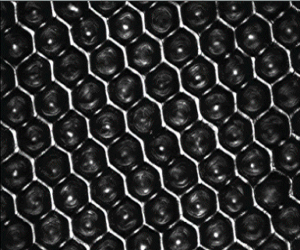
In the printing industry—particularly in flexographic printing (also known as flexo or gravure printing)—the “60-degree unit” refers to a structure on an Anilox Roller in which the printing cells are tightly arranged in a honeycomb pattern (hexagonal arrangement) at a 60-degree angle.

This is the most standard and commonly used screen roller specification in the printing industry. Below, we break down the specific meaning of this term in printing applications:

  1. What is a Cell (Network Cell)?

On a printing press, the screen roller is the core component responsible for precisely transferring and controlling the amount of ink. The surface of the screen roller is composed of countless microscopic pits that are virtually invisible to the naked eye; these ink-absorbing pits are referred to in English as “Cells” (or “screen cells”).

This section contains a detailed explanation of the topic; as a result, it generates a comprehensive display panel.

  1. What is a 60-degree (dot arrangement angle)?

The 60-degree angle refers to the angle between the arrangement direction of the mesh patterns and the direction of the mesh roller.

Honeycomb arrangement (hexagonal): When a 60-degree angle is used, the mesh cells naturally form a regular hexagonal structure resembling a bee hive.

Is it 60 degrees? In geometry, the regular hexagon represents the arrangement with the highest spatial efficiency. Compared to the traditional 45-degree diamond-shaped arrangement, the 60-degree arrangement allows the “walls” separating the mesh holes to be significantly thinner.

  1. Advantages of the “60° Cell” in printing

Higher ink storage and transfer capacity: For the same area and number of lines, a 60-degree honeycomb pattern can support approximately 15% more mesh cells than a 45-degree pattern, offering greater ink storage capacity and more uniform, stable ink transfer.

Preventing printing: During multicolor offset printing, if the dot angle of the printing plate overlaps with the angle of the screen mesh roller, an unsightly pattern will appear. A 60° angle is considered the “golden angle” – the angle most likely to conflict with the dot angles of flexographic printing plates (e.g., 15°,45°, or 75°) when calculated.

Protective ink scraper: The 60°-angled arrangement ensures uniform force distribution, effectively reducing wear on both the ink scraper and the screen roller surface, thereby extending the service life of the components.


分类
未分类

What is an Anilox Sleeve?

The screen roller sleeve (screen roller/mesh roller) is a critically important core component in modern printing presses.

Simply put, it is a lightweight screen roller in which a coil is wound around an expandable shaft. In the past, screen rollers consisted of a single, bulky solid steel shaft (the screen roller itself), which required a crane or a team of three workers to move. Modern screen rollers, however, feature a hollow, lightweight design that allows them to be easily replaced using the Mande tool.

Below is a detailed breakdown of the structure, operating principle, and advantages of the screen roller:

This setting is intended to provide additional margin for machining during production.

  1. Core structure of the mesh roller

Its exterior features a hollow tubular structure, which is typically composed of the following layers from the inside out:

Inner layer (base/inner core): Typically made of fiberglass or composite materials, it offers excellent elasticity and wear resistance, allowing it to adhere securely to the printing machine’s air mandrel.

Intermediate expansion layer (polyurethane/aluminum layer): Composed of aluminum alloy or high-density polyurethane (polyurethane), this layer provides structural rigidity and achieves the specified diameter and thickness.

Ceramic surface layer (ceramic coating): The outermost layer is coated with an extremely hard chrome-ceramic layer; this layer is then laser-engraved with the aforementioned 60-degree cell pattern (reticulated grooves) for ink application and delivery.

  1. Operating Principle: How to install?

The replacement of the web-patterned sleeve relies on the assistance of the “Air Mandrel”:

Simulation: When the printing machine operator presses the pedal or opens the air valve, tiny air holes on the surface of the air-operated shaft (center shaft) release high-pressure air, creating a layer of high-pressure air cushion on the shaft surface.

Sliding in: The worker simply needs to gently slide the mesh roller sleeve along the air cushion into the central axis and position it at the specified location.

Air release and tightening: Upon shutting off the high-pressure air, the air is removed, causing the inner layer of the mesh sleeve to securely clamp the air-blowing shaft due to the physical interference fit (full tightening force); the two components then merge into a single unit with extremely high precision, preventing any slippage.

  1. Direct comparison with traditional steel ruled rollers (ruled rollers)
characteristic Traditional screen roller (screen roller) Anilox Sleeve
weight Very heavy (from dozens of kilograms to over 100 kilograms) Very lightweight (only a few kilograms – easy for one person to carry)
Order Reconciliation Time Requires a crane and screw removal; operation for 30–60 minutes. Pneumatic sliding – replacement takes only 1–3 minutes.
Storage space Features a central shaft; large size, occupies significant space, and is prone to accidental impacts. Hollow tubular design; can be vertically ordered as needed, saving significant space.
Installation Cost purchasing an entire steel shaft for each different specification incurs high costs. The shaft is fixed; simply purchase different welding components for long-term cost efficiency.
print speed At high speeds, the vehicle is prone to collapse due to its own weight. Lightweight design with excellent dynamic balance, making it ideal for high-speed operation (e.g., 400–600 m/min)
  1. Applicable Devices

The Anilox Sleeve is an essential component for both satellite flexo printing machines (CI Flexo) and modern inline flexo printing systems (Inline Flexo). As these machines are designed to meet the demands of the modern market – characterized by high efficiency, a wide variety of products, and small batch sizes – they require a changeover process completed within just a few minutes; traditional screen rollers simply cannot accommodate such speed requirements.


If you see a set of specifications stating: Anilox Sleeve-800 LPI-3.5 BCM-60°

This refers to a sleeve-type screen printing roller featuring 800 laser lines per inch on its surface, an ink capacity of 3.5 BCM per screen, and screen arranged in a 60-degree honeycomb pattern.

分类
未分类

What is BCM?

In the printing industry, BCM is a key technical parameter representing one billion cubic micrometers (1 billion μm³); it serves as the base unit for measuring the ink volume capacity of the engraved mesh cells on an Anilox Roll in flexographic printing or on the plate carrier in gravure printing.

In other words, 1 BCM is defined as the amount of gravure material that can be accommodated per square inch of screen roller surface – specifically, 1 billion cubic micrometers of gravure material (conversion factor: 1 BCM ≈ 1.55 cm³/m², or approximately 1 microliter of volume).

  • The core role of BCM in printing

The ink film thickness and color penetration determine the BCM value: the magnitude of the BCM value directly dictates the amount of ink that can be applied. BCM refers to the humidity level that the screen roller can convey and transfer to the printed substrate; this printed color humidity also influences the process.

Precise consumption control: An appropriate BCM ensures absolutely uniform printing or ink thickness. If the BCM is too low, it may result in exposed areas or insufficient ink transfer; if the BCM is too high, the ink may overflow, causing fine text to appear thicker, dots to expand, or even paper smudging.

  • Common BCM configurations for printing applications

Different printing products have varying BCM requirements:

Printing Type / Requirements Recommended BCM range applicable scene
High-precision dot matrix printing Lower BCM (e.g., 1.5–3.0 BCM) High-end labels, exquisite portrait images, or high-resolution digital image printing
Text and Line Printing Medium BCM (e.g., 3.0–5.0 BCM) Instructions on the packaging bag; oats; standard design
Large-area actual printing Secondly, BCM (e.g., 5.0 – 8.0+ BCM) Large base area for cardboard boxes; packaging boxes requiring color application.
Specialized robots / Finishing Very high BCM (e.g., 10.0+ BCM) Finishing oil (varnish), composite adhesive, white ink base coat

Common industry misconception: BCM is not the same as the number of network cables (LPI).

During procurement or equipment relocation, there is often confusion between BCM and the LAN cable count (LPI, Lines Per Inch).

LPI (Line Per Inch): Represents the number of dots per inch, determining the print resolution.

BCM (Volume): Represents the total capacity of the mesh aperture.

A screen roller with an LPI of 800 may exhibit entirely different BCM values depending on the depth or shape of its screen apertures.


分类
未分类

What is LPI?

In the printing industry, LPI (Lines Per Inch) is the core unit of measurement for printing resolution today; it is also known as “mesh count” or “mesh size.”

Whether used to describe a screen roller (screen roller/sleeve) or a printing plate, LPI refers to the number of screen cells or dots arranged along a length of 1 inch (2.54 cm).

  1. Anilox roller LPI (Anilox Line Count)

On the screen mesh pattern, LPI determines the density of the surface mesh pits.

Low LPI (e.g., 200–300 LPI): Indicates larger, more sparse mesh openings. This specification typically accommodates a higher ink capacity, making it suitable for large-area full-page prints, white backgrounds, or glossy finishes.

High LPI (e.g., 800–1200+ LPI): Indicates that the dots are extremely small and highly dense. Under the aforementioned 60-degree honeycomb pattern, high LPI allows millions of tiny dots to be packed into a quarter-inch area, making it ideal for printing highly detailed color photographs or fine text.

  1. Plate LPI (Plate Screen Ruler)

On a printing plate, LPI stands for the density of image dots.

Illustrated magazines, high-end labels, and color boxes typically use printing plates with resolutions of 133 LPI, 150 LPI, or even 175 LPI (the halftone dots are extremely fine, making any graininess invisible to the naked eye).

For rough printing applications such as corrugated cardboard boxes or cement bags, printing plates with a resolution of 55 LPI or 85 LPI may be used (resulting in relatively coarse dots).

  1. Golden Rule: The configuration relationship between web roller LPI and printing plate LPI

In flexographic printing (Flexo), the LPI of the screen roller must be significantly higher than the LPI of the printing plate; this is known in the industry as the “matching ratio.”

  • Traditional Golden Ratio: 4:1 to 6:1

Reason (to prevent dots from falling into the screen): If the smallest dot on the printing plate (e.g., a 1% highlight dot) has a diameter smaller than the opening width of the screen mesh on the screen roller, the dot will directly “fall” into the screen mesh. This can cause the dot to absorb an excessive amount of ink, resulting in Dirty Print, severe Dot Gain, or print smudging during printing.

illustrate:

If your current printing plate is for high-quality color printing at 150 LPI.

When multiplying by 5, you should select a screen mesh size of at least 750 LPI (or higher, e.g., 800–900 LPI) for pairing to ensure perfect printing quality.

  • The physical tug-of-war between LPI and BCM (Cell Volume)

During the manufacturing of screen rollers, LPI and BCM are in a mutually constraining relationship:

The higher the LPI value for laser engraving, the smaller the screen mesh size becomes. As the mesh size decreases, the engraving depth cannot be set too deep; otherwise, the ink may become “trapped” inside the screen due to capillary action and fail to be removed during rinsing. Therefore, as the LPI value increases, the maximum Cell Volume (BCM) that the screen roller can achieve is forced to decrease.

Web roller LPI range Common BCM combinations Primary printing applications
200 ~ 350 LPI 6.0 ~ 12.0 BCM Full-page layout, large font, opaque background, gloss finish
400 ~ 600 LPI 3.5 ~ 5.5 BCM Standard lines, medium-sized text, barcode
700 ~ 900 LPI 2.0 ~ 3.5 BCM Detailed lines and four-dot printing on a 133 LPI plate
1000 ~ 1200+ LPI 1.3 ~ 2.2 BCM Ultra-high-precision printing with a high-gloss gradient at 150–175 LPI

International Unit Tip: In Europe and the Chinese mainland, LPI is sometimes not used; instead, the metric unit L/cm (lines per centimeter) is employed.

LPI ÷ 2.54 = L/cm (e.g.: 800 LPI is approximately equal to 315 L/cm)


分类
未分类

What is an Anilox Roller?

In the printing industry, the screen roller (screen roller/screen wheel) is often referred to as the “heart” of a printing press. It is a roller with a surface that has been precision-machined; its primary function is to deliver heat to the printing plate with precision, uniformity, and consistency.

Whether you are using a traditional solid mesh roller or a lightweight mesh roller, the role they play and the physical principles governing their operation during the printing process are exactly the same.

  1. The operating principle of the mesh roller (Three-Step Ink Transfer Process)

In flexographic printing (Flexo), the screen roller acts like an ultra-precise “measurement spoon”:

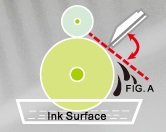
Inking: The screen roller is immersed in the ink tank, or ink is supplied directly from the closed Chamber Doctor Blade, ensuring that the numerous surface cells (screen cells) are filled with ink.

Ink scraping: The Doctor Blade makes close contact with the surface of the screen roller to remove excess excess ink from the surface, leaving only the ink within the screen cells. Subsequently, the cell volume (screen cell volume) determines the ink capacity of this cylinder roller.

Transfer: The screen roller comes into contact with the printing plate cylinder, transferring the ink from the screen grooves onto the dots or text on the printing plate.

  1. The Evolutionary History of Textured Rollers

The materials used for webbing rollers have undergone two major technological revolutions:

  • First generation: Metal mesh roller (chromed steel mesh roller)

Adding an additional conditional code enables the screen printing equipment to directly adjust and increase the printing dose, ultimately generating a comprehensive final output image.

Process flow: A mesh pattern is created on the surface of the steel roller using mechanical rolling (texturing), followed by a hard chrome plating layer to prevent wear.

Disadvantages: The mesh angle is typically 45 degrees, resulting in poor wear resistance and a low line density (generally below 300 LPI); as a result, this technique has been largely phased out, except in certain applications such as folding or rough printing.

  • Second Generation: Laser-Engraved Ceramic Anilox Roll – Modern Standard

Manufacturing process: A highly hard ceramic chromium oxide layer is sprayed onto the surface of the steel shaft or workpiece, followed by the ablation of a mesh pattern using a laser.

Advantage: Capable of creating the aforementioned 60-degree honeycomb-dot patterns with exceptionally high hardness (approaching maximum hardness), achieving dot counts exceeding 1500 LPI and enabling the printing of extremely fine dot patterns.

  1. Verify the three key performance indicators for a single Anilox Roller

When you receive a specification sheet for a screen printing roller, you will invariably find the following three core parameters – together they determine the printing performance of this roller:

  • Network cable count (Anilox Line Screen / LPI or L/cm)

The number of mesh openings arranged per inch (or per centimeter) of length.

When printing high-precision patterns (e.g., four-color halftones at 150 LPI), it is generally necessary to use a screen cylinder with a line density 4–6 times higher (e.g., 700–900 LPI); otherwise, the halftone dots on the printing plate may fall into the screen apertures of the screen cylinder, resulting in a “dirty plate” condition.

  • Cell Angle

This refers to the 60-degree angle (the most common honeycomb structure); there are also special variants with 30-degree or 45-degree angles.

  • Cell Volume (BCM or cm³/m²)

The ink capacity of the mesh aperture: the larger the volume, the thicker the printed ink layer and the deeper the color.

  • The fatal flaw in routine maintenance

Although ceramic mesh rollers are highly wear-resistant, they are quite “brittle”; they are most vulnerable to two specific issues.

Impact damage: When the ceramic layer comes into contact with metal, chipping is likely to occur. Once the ceramic surface is damaged, the corresponding network pores can no longer function properly for ink storage, leaving permanent streaks or spots on the printed material.
Ink clogging: If the press is not cleaned promptly after shutdown, the ink (especially fast-drying UV ink or water-based ink) will dry out within the deep grooves of the screen mesh at 60°C. Once clogged, the Cell Volume of the screen roller decreases, resulting in faded printing colors. Manufacturers are typically required to use an ultrasonic cleaner or a baking soda/dry ice sandblasting system for regular deep cleaning.

分类
未分类

Why are your ceramic mesh rollers always getting scratched? 90% of printing plants overlook this “end-sealing” detail!

Breaking through printing speed – but stuck with «FeiMo ink leakage»?

In today’s printing industry, where high-speed printing at speeds exceeding 300 meters per minute is commonplace, many printing plant owners and technical supervisors frequently encounter this challenge: as machines operate at increasingly higher speeds, ink splashes become more pronounced; while colors may appear accurate just one hour before startup, solvent vapors during the latter part of the printing process can lead to critical color variations.

In fact, the secret behind enabling leading international brands (such as Bobst, W&H, and Comexi) to balance both “high speed” and “optimal color accuracy” lies in the final safeguard of their mesh roller system – the chamber-based dual-squeegee system with end sealing.

What is an engraved roller end seal (End Seal)? Why is it essential for high-end printing presses?

In precision flexographic printing and coating processes, the Anilox roller is responsible for micron-level precise ink transfer. To prevent ink splashing, the ink chamber must remain completely sealed.

The End Seal (also known as the end seal disc or ink chamber barrier) is a geometric sealing component installed at the closed end of the ink chamber to ensure a rigid fit against the roller body. Acting as the “gatekeeper” of the ink chamber, it securely prevents every drop of water from leaking under extreme operating conditions—characterized by high rotational speeds, high pressure, and intense friction.

Why have printed rollers with end sealing become synonymous with ‘high-end’
  • Abandon momentum to achieve maximum control over “zero chromatic aberration”.

The traditional open ink delivery system exposes the ink directly to the air, causing the solvent to evaporate rapidly and leading to continuous changes in ink viscosity. In contrast, a sealed roller system with an end-seal completely isolates the ink from the air. Whether for orders spanning 10,000 meters or 100,000 meters, color saturation remains consistent throughout every meter – from the first to the last. This represents our proven capability, which is precisely what enables us to secure high-end cosmetic and luxury packaging orders.

  • Patented sealing technology ensures maximum protection – eliminating flying ink and shop contamination.

When the roller operates at ultra-high speeds, the centrifugal force is extremely high. The high-end sealing system utilizes polymer adhesives with a “memory effect,” high-density specialized foam, or impregnated felt. Under high-speed tension, these materials not only prevent heat-induced deformation but also ensure a tight fit around the edge of the screen printing roller. This eliminates inking and leakage, creating a clean, automated workshop that complies with modern environmental standards and ISO certification requirements.

  • Protects expensive ceramic mesh rollers, extending their service life by 2–3 times.

The ceramic mesh surface of the mesh roller is extremely fragile and is particularly susceptible to uneven scraper force or wear caused by hard objects. High-end end-sealing systems feature precise geometric curvature and self-lubricating properties. These systems balance scraper pressure to prevent scratches on the mesh roller surface (which can cause severe “Score lines”), protecting high-value assets worth hundreds of thousands of dollars at an exceptionally low material cost.

分类
未分类

Printing Press Upgrade Guide: The Key Impact of Precision End-Sealing Technology on Extending Iridescent Roller Life and Fluid Control

Have you exceeded your printing speed but are experiencing “ink splattering or leakage”?

In today’s era of pursuing printing speeds exceeding 300 meters per minute, many printing plant owners and technical supervisors frequently encounter this common challenge: as the machine speed increases, the ink tends to fly more erratically; just one hour before startup, colors may appear accurate, but during the latter part of the printing process, solvent vapors can directly cause fatal color shifts.

In reality, the secret behind how leading international brands (such as Bobst, W&H, Comexi) can simultaneously achieve both “high speed” and “optimal color accuracy” lies in the final safeguard of the web roller system: the chamber-type double scraper system with end sealing.

What is a web roller end seal? Why is it essential for high-end printing presses?

In precision flexographic printing and coating processes, the Anilox roller is responsible for micron-scale precision ink transfer. To prevent ink splashing, the ink chamber must remain completely sealed.

The end seal (also known as the end seal plate or ink chamber barrier plate) is a geometric sealing component installed at the endpoint of the sealed ink chamber, designed to fit rigidly against the roller body. Acting as the “gatekeeper” of the ink chamber, it securely traps every single droplet of water under extreme operating conditions characterized by high rotation, high pressure, and high-speed friction.

Why do printing rollers with end seals become synonymous with “high-end”?

  1. Overcome optical aberrations to achieve maximum “zero chromatic aberration” control.

Traditional open ink delivery systems expose the ink directly to the air, causing the solvent to evaporate rapidly and resulting in continuous fluctuations in ink viscosity. In contrast, the closed roller system with end sealing completely isolates the ink from the air. Whether for orders ranging from 10,000 meters to 100,000 meters, the color saturation and consistency remain consistent throughout the entire production process—from the first meter to the last meter. This represents the core technical capability that enables the fulfillment of high-end cosmetic and luxury packaging orders.

  1. Patent materials feature maximum sealing, eliminating ink splatters and shop contamination.

When the roller body operates at ultra-high speeds, the centrifugal force becomes extremely intense. High-end sealing systems utilize polymer-based elastomers with a “memory effect,” high-density specialized foam materials, or impregnated felt. Under high-speed tension, these components not only resist heating and deformation but also ensure a tight fit against the edge of the mesh roller. This prevents ink spattering and leakage, enabling the creation of a clean, automated workshop that complies with modern environmental standards and ISO certification requirements.

  1. Protects expensive ceramic web rollers, extending their service life by 2–3 times.

The ceramic mesh on the web roller surface is extremely fragile and highly susceptible to damage caused by uneven scraping force or wear from hard objects. High-end end-sealing systems feature precise geometric curvature and self-lubricating properties, which help balance the scraper’s pressure, prevent scratching of the web roller surface (which would result in fatal “Score lines”), and protect high-value assets worth hundreds of thousands of dollars with minimal consumable costs.

High-End vs. Traditional: A Table to Understand Investment Return on Investment (ROI)

Core Dimensions Traditional open-type / non-precision end-sealed roller High-end end-sealed chamber-type roller system
Color stability There is a discrepancy; frequent manual feeding adjustments are required, and color variation is likely to occur. Excellent: fully enclosed throughout, with perfect dot rendering.
Ink waste rate High levels of ink smudging; cleaning is time-consuming and labor-intensive. Ultra-low emissions; fully recyclable ink; eco-friendly.
High-value roller life The short length results in uneven stress distribution, which can easily cause tearing of the ceramic surface. Extremely long, precision fine-tuning pressure, provides close-fitting protection.
Order-winning competitiveness Only suitable for general cardboard boxes and low-to-mid-level packaging. Easily handle high-complexity orders from top-tier international brands.

The details determine whether you are engaged in “manufacturing” or “art”.

Whether printing equipment is considered high-end often depends not on its physical size, but on its ability to achieve exceptional precision in even the smallest details. The precision printing roller system with end sealing utilizes cutting-edge engineering design to address highly challenging fluid control challenges.

Want to boost your production line speed, reduce consumable waste, and win over high-margin premium customers? Upgrade your equipment now to a precision webbing roller system with end sealing capabilities—turn every operation into a hallmark of high productivity!


分类
未分类

Wool rollers are not low-end consumables; this factory has saved six-digit amounts in costs through their use.

In modern high-precision printing, coating, and finishing processes, the irreplaceability of wool paper rollers (commonly referred to in the industry as pulp rollers or elastic soft rollers) is determined by their unique microphysical structure, thermodynamic stability, and rheological behavior.

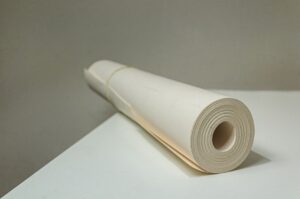
Close-up view of a rolled white paper on a desk, showcasing simplicity and texture.

When operating under demanding conditions such as high-precision coated paper finishing, cigarette packaging aluminum foil embossing, and anti-counterfeiting printing, this solution represents the only viable choice for ensuring “no roller bursting, no paper damage, and high gloss.” Its irreplaceable professional mechanism can be broken down into the following four core dimensions:

I. Unique rheological behavior: the “microscopic shear polishing effect” within the nip zone

The high gloss and smoothness of printing materials (such as high-grade coated paper and opaque cardstock) cannot be achieved through simple “dead pressing”; instead, “ironing” is required. The wool paper roller serves as an ideal “ironing plate” during the finishing process.

  • Nip width deformation and contact arc length: When the wool paper roller is pressed against a heated steel roller (hard roller), the elastic modulus of the paper roller surface allows for moderate local macro-deformation. This increases the nip width and extends the dwell time of the paper within the nip zone.
  • Micro-slip and frictional shear force: Within the pressing zone, due to a slight discrepancy in the linear velocities of the soft and hard rollers within the geometric deformation region, a minimal amount of shear slip occurs between the surface of the wool paper roller and the surface of the paper. This slip generates a high-frequency “micro-polishing” effect.
  • Irreplaceability comparison:
  • Metal rollers (steel-to-steel): There is no slippage; these rollers only crush the high points on the paper surface (crush), resulting in uneven lateral thickness of the paper (caliper variation) and an increased likelihood of “metallic glare.”
  • Polymer polyurethane/rubber rollers: Although they possess elasticity, if their surface coefficient of friction (COF) is either too high or too low, it can easily lead to paper tearing or the formation of slip marks, preventing them from achieving the extremely uniform and fine mirror-like finish characteristic of wool paper rollers.

II. Unique “Physical Tolerance”: exceptional resistance to carburation and superior heat dissipation capabilities under high shear conditions

In modern high-speed calendering machines (with line speeds typically ranging from 1,000 m/min to 1,500 m/min and pressures ranging from 300 N/mm² to 450 N/mm²), the internal hysteresis heat and surface friction heat generated within the calendering zone are particularly detrimental.

  • The heat dissipation mechanism of porous fiber matrices: The wool paper roller is a non-woven matrix composed of up to 40% natural wool fibers interwoven with specialized plant fibers. Wool fibers naturally possess a hollow structure (medullary layer), which provides excellent capillary heat dissipation and respiratory effects.
  • Dynamic viscoelastic thermal stability: Under high-frequency dynamic compression-release cycles, the wool paper roller exhibits an extremely low loss factor ($\tan \delta$). It can withstand continuous linear surface temperatures ranging from 150°C to 200°C without experiencing thermal softening or thermal creep.
  • Irreplaceability comparison:
  • Synthetic rubber or polymer soft rollers (such as polyurethane): Under high-speed and high-pressure conditions, the internal dissipation heat cannot be discharged promptly, making it highly prone to “thermal accumulation.” Once the glass transition temperature ($T_g$) is reached, the polymer chain segments slide, causing the roller body to melt instantaneously, leading to a “blow-out” event and resulting in severe production accidents.
  • Standard cotton-based paper rollers: their maximum temperature resistance is typically below 130°C, making them highly susceptible to scorching and bowing carbonization under high-speed operating conditions.

III. Outstanding “Shape Deformation Memory” and “Foreign Body Tolerance”: Zero-Death Pit Effect

The printing workshop cannot completely avoid raw material defects. When paper splices, localized creases, or hard foreign objects (such as detached coating particles) pass through the press zone at high speeds, they can cause catastrophic damage to the rollers.

  • The natural curly “micro-spring” network: wool fibers possess a highly developed micro-scale scale structure and inherent crimp. This network endows the paper roller with exceptionally high and rapid elastic recovery.
  • Stress self-dissipation and “inclusion”: when an foreign object passes through, the protrusion rapidly embeds itself into the surface of the wool-paper roller. The paper roller absorbs energy through localized micro-deformation (where stress concentration is dispersed throughout the surrounding fiber matrix), thereby protecting the opposing hard roller from scratching while ensuring that the paper is not cut.
  • Irreplaceability comparison:
  • Cotton paper roller: The fibers exhibit high stiffness and poor elastic recovery; when foreign objects pass through, permanent “denting” marks will remain on the surface. During subsequent operation, these denting marks can cause periodic white spots to appear at corresponding positions on the printed product, potentially leading to the premature failure of the entire roller assembly.
  • Steel rollers: Due to zero tolerance policies, foreign objects may directly crush the paper and permanently damage the surface of the steel rollers.

IV. “Adaptive Running-in” in embossing and low-stress transfer

In the embossing process used for high-end packaging such as cigarette packs and liquor boxes, the wool paper roller serves as the counter roller; its irreplaceability stems from its ability to achieve perfect pattern adaptation.

  • Precise pattern replication and extremely low pattern wear: During the initial press-in operation with a finely engraved steel pattern roller (master roller)—specifically during the startup alignment phase—the fibers on the wool paper roller’s surface undergo microscopic rearrangement and solidification under the combined influence of moisture, temperature, and pressure, automatically and with complete precision forming three-dimensional positive-negative embossed patterns that correspond to those on the steel roller.
  • Uniform interface stress distribution: Due to its microelastic properties, the material exerts an extremely low edge shear force on the textured protrusions, applying only a vertical pressure at the linear protrusions. This enables printed materials to achieve high-end visual effects characterized by sharp line edges, strong three-dimensional depth, and a surface free of micro-cracks.
  • Irreplaceability comparison:
  • Plastic/molecular sleeve rollers: Their hardness and springback properties are often either excessively rigid or excessively soft. If they are too hard, they will cause severe wear to the expensive fine engraved patterns on the steel roller; if they are too soft, the pattern contours will become blurred, preventing the achievement of high-resolution cliff-style stepped embossing.

High-resolution close-up of a textured surface with beige natural fibers forming intricate patterns.

The irreplaceability of wool paper rollers lies in their perfect balance between “the rigidity of metal (for supporting high line pressure),”  “the flexibility of rubber (for protecting both the material and the roller itself),” and “the heat resistance and breathability of natural fibers (ensuring high-speed continuous operation).” After decades of evolution in materials science within the industrial sector, it has emerged as the “ultimate soft roller material” for modern high-precision, high-speed printing and finishing processes.


分类
未分类

Last year, we visited 20 factories and found that the web roller in 19 of them was operating “with defects” —the root cause being that the factory owners were unaware of this issue.

Don’t let a web roller costing several thousand yuan devour your hundreds of thousands in printing profits! In the printing and consumer goods industries, when factory owners seek to reduce expenses, they often focus on the unit purchase price of web rollers: “This one is cheaper by several thousand, that one is cheaper by a thousand—just buy the cheaper one first.” But what is the result? Ink consumption remains stubbornly high; intermittent cleaning occurs; significant color variations lead to customer returns; and the scraper becomes worn out, requiring frequent replacement…

As a seasoned industry partner in the screen roller sector, we deeply understand the operational challenges faced by manufacturers. Today, rather than delving into complex academic theories, we will focus solely on a business-oriented approach—centered on cost control and enhancing operating profitability—to help our clients conduct thorough financial analyses and gain clear insights into how to source screen rollers that deliver genuine cost savings.

I. Clarifying the “confusing calculations”: Should you focus on the procurement unit price or on the “printed cost per meter”?

  • Many people believe that ceramic screen rollers are expensive. However, from a factory operational perspective, screen rollers should be viewed as “production investments” rather than “one-time consumables.”
  • Low-end metal rollers/substandard rollers: While they are indeed inexpensive for initial procurement, they feature low thickness; the scraper will soon wear down the mesh holes. Once the volume of these mesh holes decreases, the color becomes lighter; to restore the original color, one must either add ink or adjust the machine settings—a process that not only wastes ink but also increases the scrap rate. These rollers often need to be scrapped and replaced within less than six months, incurring additional labor costs.
  • High-quality ceramic mesh rollers: Although initially expensive, their pore size rivals that of diamond, offering excellent wear resistance and corrosion resistance. The consumption rate of premium ceramic mesh rollers is several times lower than that of ordinary rollers; when averaged per day and per meter, the equipment depreciation cost proves remarkably low. Being affordable, durable, and maintenance-free truly represents significant cost savings.

II. Identifying the “Money-Attracting Black Hole”: How to Assess Ink-Saving Capability Through Network Analysis?

  • Inks and adhesives are constantly consumed materials in factories. The “ink release rate” of the screen roller directly determines whether you save or waste ink.
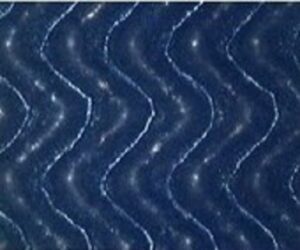
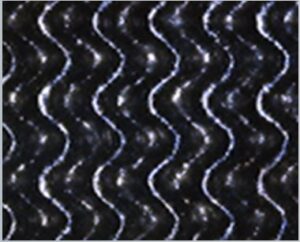
  • Traditional pyramid-shaped mesh cells resemble a deep-bottomed bowl, where only 50%-60% of the ink can be poured out, while the bottom drainage channel causes the contents to dry up completely. This not only leads to waste but also easily clogs the mesh, requiring frequent cleaning by workers.
  • Advanced mesh patterns (e.g., S-shaped or elongated): High-quality engraving ensures smooth, mirror-like mesh surfaces with an ink release rate of 70–80%. This means achieving the same color penetration or adhesive coverage requires only shallower mesh depths.
  • Boss’s Cost-Saving Guide: This single measure can help factories reduce ink or adhesive waste by 15%–30%. Over the course of a year, the savings will easily cover the cost of purchasing several new rollers!

III. Precise Matching: Do not buy the most expensive option; only purchase the most appropriate thread count.

  • Some printers hold a misconception that “the higher the LPI (Line Per Inch) rating, the finer the print quality.” As a result, when they go to purchase equipment, they often encounter frequent ink clogging issues.
  • A cost-effective selection must be based on your product’s precise positioning:
  1. Large-area full-page background color or coated adhesive application: low mesh count, large coverage area. Ensure sufficient ink supply, achieve uniform coverage, and avoid exposed white areas.
  2. Fine lines/High-definition labels/Dot matrix printing: high dot count, low line count. Note that the dot count must be 4–6 times the plate dot count to prevent double images and blurring.
  • Avoiding Pitfalls: If you are unsure, our technical team can provide you with a precision test version (Band Roll) for physical prototyping, allowing you to directly test on your own machine to determine the optimal balance point—where “ink consumption is minimized while quality is maximized.”

In a manufacturing plant, success hinges on management and efficiency. A single screen roller may appear to be merely purchased equipment, but in reality it serves as a critical tool for ensuring effective dehydration, reducing defective product returns, and minimizing downtime.

If you need a free evaluation of foam coating and efficiency for your existing factory equipment, or if you’re concerned about color variation or costs for a particular product, please contact us. We’ll use professional data to help your factory turn every saved dollar into tangible profits!

分类
未分类

Still wondering how to purchase wool rollers and embossing rollers? One detail tells you everything

To help you better understand the interplay between embossing rollers and wool rollers in actual factory production, we’ll move beyond rigid definitions and conduct a thorough comparison across three practical dimensions: “destructive power versus tolerate capacity,”  “capital investment versus maintenance costs,” and “the most common production pitfalls new operators encounter.”

I. Key Conflicts: Rigid Breakdown Force vs Flexible Tolerance

On the production line, the collision between these two rollers is essentially a mechanical interaction of “hard-on-soft”.

  • The embossing roller is a “rigorous mold”: it functions as a high-speed rotating steel impression. Its pattern is absolutely uncompromising, forcibly overcoming any obstacles encountered. If two steel rollers are pressed directly against each other, even slight variations in material thickness will immediately result in crushing, cutting, or the formation of defective creases.
  • The wool roller serves as a “gentle cushion”: its very purpose is to counteract the rigidity of the embossing roller. When the steel teeth of the embossing roller engage, the wool roller automatically depresses, distributing pressure evenly around the material. This mechanism forces the material to deform along the steel grooves (creating patterns) while preventing it from being damaged.

II. Dynamic Comparison: Multi-dimensional Practical Game Theory Analysis

Dynamic Comparison Factor embossing roller (a robust and reliable output component) Wool roller (a supporting component that silently bears load)
Tolerance range for material thickness Extremely low. If the material thickness exceeds the set tolerance (even by 0.05 mm), either the embossing roller will jam or the equipment motor will trigger an overload alarm. Extrremely high performance. It possesses an exceptionally high elastic compression ratio, enabling self-compression to dissipate instantaneous impact forces when the material suddenly thickens.
Resistance to abnormal foreign bodies Extremely strong. Occasionally, a small screw or hard object may pass through; the steel roller may cause at most minor surface scratches, or even directly flatten foreign objects. Lethal. A paper clip or rigid plastic piece passing over the surface will create a permanent dent, rendering the entire roller unusable.
Exhibit temperature characteristics Active temperature control. The interior is typically hollow and requires the introduction of heat-conductive oil at 100°C to 200°C to activate the molecules of plastic or paper. Passive heat resistance. The material does not generate heat itself; however, prolonged exposure to temperatures above 150°C accelerates wool carbonization, brittleness, and fiber shedding, constituting a form of “chronic self-destruction.”
Capital Investment and Depreciation Logic The high cost per investment. Producing a high-end leather-textured roller can cost anywhere from tens of thousands to hundreds of thousands of yuan, yet it is a fixed asset that lasts for many years. High-frequency operational consumption. While inexpensive to purchase, it requires disassembly and surface re-milling every few weeks, making it a typical “cash-draining” consumable.

III. Comparison of “Disaster Scenes” on the Production Line (Negative Examples)

By examining the most common accidents that occur during actual operation with these two rollers, you can gain a clearer understanding of their fundamental differences.

Disaster A: “Flower clogging” and “pattern degradation” of embossing rollers

  • On-site conditions: During the production of napkins or non-woven fabrics, severe static electricity can cause minute fibers on the material to adhere tightly to the microscopic grooves (commonly referred to as plug rollers) of the embossing roller like cement.
  • Consequences: At this stage, the embossing roller becomes a “flat roller,” producing increasingly flat products devoid of any patterns. Workers must halt the machine and meticulously remove impurities from the steel seams using steel brushes, ultrasonic waves, or chemical agents.

Disaster B: The “memory effect” and “core burnout” of wool rollers

  • On-site observation: When processing narrow-width fabrics (e.g., 500 mm wide) for extended periods, the central 500-mm section of the wool roller becomes permanently concave due to prolonged pressure, while both sides remain convex.
  • Consequences: When you suddenly attempt to switch to producing fabric with a width of 800 mm, you will find that the central 500 mm section cannot reproduce the pattern at all, because the wool roller has “remembered” the previous compression depth. At this point, the roller must be removed and sent to an external grinding machine to have the elevated sections on both sides ground away, resulting in a direct reduction in the roller’s diameter by one full circle.
  • A more severe case of “core burn”: When local pressure is excessively high and lubrication is lacking, wool accumulates heat internally under high-speed friction, ultimately causing smoke emission, carbonization, and collapse within the roller.

IV. Balancing Cost and Craftsmanship During Model Selection

When establishing a new production line, engineers typically face challenging budgetary trade-offs between these two factors.

  1. Laser-cut steel roller + high-density wool roller (classic combination):
  • Features: The pattern exhibits strong three-dimensional depth and a sophisticated visual effect (ideal for high-end automotive interiors or premium wallpapers).
  • Cost: Wool rollers require high maintenance costs and demand exceptional pressure adjustment expertise from operators.
    1. Steel roller + Steel roller (opposing die):
  • Features: No consideration is required for wool roller wear; production is highly stable and extremely fast (e.g., embossing of aluminum foil or color-coated steel plates).
  • Cost considerations: The pattern tolerances of the two steel rollers must achieve micrometer-level precision engagement; initial coupling and mold manufacturing costs increase exponentially, and material thickness must remain strictly constant.
分类
未分类

How do you choose between magnetic rollers and flexible blades? Four key indicators tell you

The magnetic roller and flexible blade form an inseparable golden duo in modern rotary die-cutting systems. Each component performs its specific function, working in synergy to achieve high-speed, high-precision material cutting through a perfect balance of rigidity and flexibility.

Below is a detailed comparison of their parameters and practical applications across various industries:

I. Comparative Analysis of Depth Between Magnetic Rollers and Flexible Blades

Comparison Dimension Magnetic Cylinder Flexible Die Blade/Blade Skin
essential attributes High-precision hardware base equipment constitutes fixed assets of the die-cutting machine. Customized thin-slice consumable tools that can be replaced according to the die-cut pattern.
Main Material Made of high-chromium stainless steel and high-permeability ferromagnetic material, with built-in powerful neodymium iron boron permanent magnets. High-strength spring steel and alloy steel, which can be coated with anti-adhesion and wear-resistant finishes.
Key Indicator Magnetic attraction force (typically ≥ 9.1 N/cm²); round runout tolerance (TIR ≤ ±0.002 mm). Blade height (typically 0.32 mm to 1.5 mm), angle (30° to 110°), and flatness.
production engineering Mechanical turning, precision grinding, magnetization assembly, balance calibration. Computer-aided drawing with micron-level chemical etching and CNC-controlled engraving edges.
Life and Maintenance Extremely long (over 10 years). Care should be taken to avoid impacts on the shoulder support, prevent rusting, and minimize bearing wear. Shorter (from tens of thousands to hundreds of thousands of revolutions). It is a material prone to dulling and is significantly affected by material hardness and pressure.
Cost Budget Although the initial investment cost is high, it is a standard component for long-term use in equipment. With lower unit costs compared to traditional solid-round knives, it is ideal for rapid prototyping and multi-product manufacturing.
way to install The entire unit is securely mounted on the die-cutting machine base and rotates via a precision gear mechanism. It is automatically magnetically attached to the roller surface and quickly affixed along the alignment marks.

II. Core Application Details (By Industry)

The combination of these two technologies is widely used in high-speed assembly processes across various fields such as labeling, printing, electronics, medical applications, and automotive manufacturing.

1. Adhesive Labels and the Packaging Printing Industry

  • Typical products: daily chemical product labels, logistics barcodes, anti-counterfeiting labels, wine labels, and envelope stitching materials.
  • Application Benefits:
  • Kiss-cutting control: The flexible blade’s micron-level precision enables accurate cutting through the upper material layer and adhesive without damaging the base paper.
  • Fast production changeover: For label orders with multiple SKUs and small batches, operators simply remove the old blade cover and install a new one within minutes, eliminating the need to disassemble heavy magnetic rollers and significantly reducing downtime.

2. Die-cutting of 3C Electronics and Semiconductor Materials

  • Typical products: internal ink pads for mobile phones, graphite heat sinks, conductive fabric, double-sided back adhesive, protective films, and shock-absorbing foam. Application advantages:
  • Multilayer complex structure cutting: The internal structure of electronic components is highly intricate. By customizing flexible blades with varying blade heights, specialized processes such as full local cutting or partial local cutting can be achieved.
  • Non-adhesive and anti-static properties: When processing highly adhesive 3C tapes, the surface of the flexible blade can be coated with a fluorine layer or a Teflon-based non-adhesive layer to prevent material from sticking to the cutting edge.

3. The Field of Medical and Sanitary Products

  • Typical products: band-aids, medical dressings, blood glucose test strips, protective masks, and adhesive patches.
  • Application Benefits:
  • Clean production: The combination of flexible blades and magnetic rollers operates without generating metal debris. Supported by stainless steel and specialized anti-corrosion coatings, they fully comply with the hygiene standards of medical cleanrooms.

4. Automobiles and Industrial Manufacturing

  • Typical products: automotive body sound insulation gaskets, flame-retardant foam, masking tape, and dashboard back adhesive.
  • Application Benefits:
  • For heavy materials: When working with thick industrial foam or gaskets, use a flexible blade with an increased cutting edge height (e.g., 1.2–5 mm) paired with a large-diameter magnetic roller to achieve robust deep stamping and cutting.

III. Key Maintenance Techniques for On-Site Use

To maximize the processing efficiency of this “golden duo,” the following points are crucial in practical implementation:

  1. Prevention of minor rust spots: Even the presence of invisible rust spots as small as 10 μm on the surface of the magnetic roller can cause localized elevation of the attached flexible blades, resulting in uneven die-cutting depth. After removal from the machine, the surface must be cleaned with alcohol, coated with anti-rust oil, and stored in a protective container.
  2. Clean the surface of the roller: Before attaching the flexible blade, ensure that the magnetic roller surface is free of adhesive residues or metal debris; otherwise, these may directly damage the blade surface or prevent proper cutting performance.
  3. Appropriate base roller pressure: Never blindly increase the machine pressure to address cutting difficulties, as excessive pressure accelerates blade edge wear on flexible blades and may even cause axial deformation or bending of the magnetic roller.
  4. The issue of cost-effectiveness when making a purchase

Regarding the pricing and application scenarios for these two products, we recommend opting for the more durable magnetic rollers when handling large cutting materials or requiring frequent use, while choosing the cost-effective flexible blades for precision cutting tasks or infrequent, flexible applications.

分类
未分类

[New Product Recommendation] Precision ≤0.02 mm! How does the Hirsch HSP series plate applicators redefine flexographic plate-making efficiency?

In flexographic printing, plate registration accuracy directly determines the final print quality. The HERZPACK HSP series sleeve-type plate applicators, developed through proprietary high-precision pneumatic actuators and intelligent control systems, have become the preferred equipment for packaging printing manufacturers.

  • Key Highlights: Dual Breakthroughs in Precision and Efficiency

Whether manual or semi-automatic, the HSP series comes standard with a high-definition camera and a high-precision weather sensor, ensuring overall machine accuracy within ≤0.02 mm.

Enhanced clarity: Equipped with a high-definition industrial camera for sharp images and precise alignment. More convenient operation: The dual-front-back tape-sticking platform, combined with a dedicated cutting tool, enables seamless tape application and removal.

  • Model Comparison: HSP M (Manual) vs. HSP H (Semi-automatic)

We offer two configurations to meet various production capacity requirements:

characteristic HSP M (Manual Version) HSP H (Semi-automatic model)
Driving Method motor drive Servo Motor Drive (Servo Motor)
Multiple Positioning Accuracy ≤0.02mm ≤0.01 mm (higher precision)
Smart Features Basic Operations Database Management: Parameters can be stored and called
applicable scene Regular label application requirements Multiple versions and manufacturers; staggered installation positions; complex order requirements.
  • The HSP semi-automatic model is designed for complex orders.

If you need multi-color printing or require multiple small plates on a single sleeve, the HSP H is your best choice:

Servo closed-loop control: Both lateral camera movement and rotation of the air-bearing shaft are driven by Yaskawa servo motors, achieving automatic positioning after coordinate setting.

Data Traceability: Unique database management features store plate parameters, allowing direct retrieval upon order reprocessing without reconfiguration, significantly reducing plate-making costs.

Top-tier configuration: Equipped with a Mitsubishi PLC, Samsung display screen, and upper silver guide rails to ensure long-term stable operation.

  • Specification Reference List
Parameter Item HSP1500 (M/H) HSP1900 (M/H)
Maximum Width 1500mm 1900mm
Maximum Printing Perimeter 1400mm 1400mm
Voltage/Power 220V / 1.0KW-1.6KW 220V / 1.0KW-1.6KW

Choosing the HERZPACK HSP series plate mounters means achieving higher printing yield and lower production costs.

Welcome to contact us for a detailed quote and demonstration video!

分类
未分类

Addressing the challenges associated with secondary coating of decorative paper It all starts with a “sturdy” mesh roller.

In the decorative paper impregnation process, secondary coating demands exceptional precision. Conventional screen rollers frequently encounter two major issues: thin screen walls that are prone to scratching, resulting in uneven coating and frequent production stoppages.

Today, HERZPACK has introduced a high-capacity, highly durable direct-embossed coated mesh roller specifically designed for decorative paper impregnation machines, effectively addressing operational challenges in equipment operation.

Core Performance Overview:

  • Extravagant coating capacity: The mesh cable achieves a capacity of 10 LPC with a mesh cell volume up to 120 CC, perfectly meeting the requirements for high coating volumes in secondary coating applications.
  • Direct carving technique with ultra-thick mesh walls: breaking away from traditional carving methods.

    Conventional embossed mesh walls are extremely thin (indicated by the red arrow) and highly susceptible to wear. Our HERZPACK employs direct embossing technology to produce thicker, more durable mesh walls, completely eliminating the issue of scratch damage to the mesh cells and significantly extending their service life.
  • High-speed operation ensures smoother scraping performance: The top surface of the grid wall in the direct engraving process features a ceramic layer that has been originally ground and polished, resulting in an exceptionally smooth surface. During high-speed operation, the scraper adheres more smoothly, significantly reducing friction noise while substantially extending its service life.
  •  

    Recommendation: Given the deep cavity (120 CC), using a ceramic spatula is recommended to further reduce wear and ensure consistent coating coverage.

    Standard laser-engraved mesh cavities (with thin mesh walls and an uneven top surface)

    The red arrow indicates the damaged area of the conventionally carved thin mesh wall (clear contrast visible).

    Direct carving technique results in thicker mesh walls and smoother mesh pores.

    If you’re also experiencing “insufficient coating amount” or “severe spatula wear” during decorative paper coating, feel free to leave a comment and discuss with us!

分类
未分类

Skills of using ceramic anilox roller

Ceramic anilox roller is made of high temperature resistant and wear-resistant layered material, which is carved according to certain density, depth and angle, so its production cost is also high. If used correctly, the service life can be prolonged to several years, otherwise it will be shortened. Therefore, what are the tips when using ceramic anilox rollers?

In the process of use, the position of a certain anilox roller on the printing press depends on the specific printing piece. The position of the anilox roller varies with different printing pieces. Therefore, it is often necessary to replace the anilox roller during printing.

The second trick is that the current narrow frame machine mostly uses solid steel anilox roller, which is very heavy. When installing the anilox roller, pay attention to avoid touching the surface cover of the anilox roller with other metal objects. Because the ceramic coating is very thin, it is easy to cause permanent damage after collision.

Third, in the process of printing and cleaning the machine, it is necessary to avoid the ink drying on the anilox roller. The special detergent recommended by the water-based ink manufacturer should be used, and the stainless steel brush should be used to clean and thoroughly clean. And develop the habit of often using a high-power magnifying glass to observe the net hole of the anilox roller. Once the ink is found to deposit on the bottom of the net hole and there is a trend of gradual increase, it should be cleaned in time. If the above methods are not effective, ultrasonic or sand blasting can be used, but it must be carried out under the guidance of the roller manufacturer.

In short, whether it is ceramic anilox roller, mirror roller or other, their correct operation and use are particularly important, only in this way, can its service life be extended, and the cost can be saved for enterprises. If you understand the above ceramic anilox roller using skills, I believe your work efficiency will be higher, the effect will be better.

分类
未分类

Introduction and use specification of anilox sleeve

Features of anilox sleeve

In addition to the outstanding advantages of quick replacement and high efficiency, the anilox sleeve also has the advantages of simple operation, light weight, low transportation costs, and suitable for small batch orders.

  1. The emergence of anilox sleeve will further shorten the adjustment time when changing jobs, especially in the situation where the proportion of small batches of short-plate jobs is increasing, it is extremely important to compress non-productive preparation time.
  2. The anilox sleeve is made of special composite materials. The inner wall of the sleeve is highly smooth, and the processing accuracy of the cells and the ink transfer performance meet the printing requirements. It is light, durable and not easy to damage. Due to the increase of the width of flexo printing, commonly used ceramic anilox rollers often have difficulties and unsafe problems in handling, loading and unloading, and anilox sleeve can well avoid this problem.
  3. The inner layer of both ends of the anilox sleeve is equipped with an edge protection ring, which plays a role of protection and stability, is convenient for handling, and prevents its eccentric deformation. At the same time, a mark can be attached to identify the number of mesh lines to be correct. Choose.

Installation and disassembly of anilox sleeve

Improper installation and disassembly can easily cause deformation and damage to the anilox roller and reduce the service life:

  1. When installing and dismantling, ensure sufficient air flow, usually the air pressure needs to be above 6Kg/cm2.
  2. When installing and dismantling, two people are required to cooperate. The two people separate the two sides of the anilox sleeve, cooperate to support the anilox sleeve,and insert/draw out the anilox sleeve straightly. If the installation or disassembly is not smooth, it is strictly forbidden to go up and down shake or tap with a hammer to try to increase the air pressure and air flow. Shaking will cause the anilox sleeve to deform, which will affect the run-out accuracy in the slightest, and cause cracks and bulges on the sleeve surface in severe cases; knocking will cause the edge ceramics to fall off, affecting the use.
  3. When using, pay attention to avoid ink flowing into the gap between the air shaft and the anilox sleeve, so that the anilox sleeve and the air shaft are glued together, making it difficult to disassemble. In case of ink infiltration, disassemble and clean it in time after stopping the machine.
分类
未分类

Introduction to flexo printing

What is flexo printing

Flexo printing is a kind of letterpress printing process, called flexo printing, which uses a flexo printing plate and pre-coats ink with an anilox roller. The graphic part of the flexo printing plate is different. During printing, the anilox roller evenly coats a certain thickness of ink layer on the graphic part of the printing plate, and then under the action of the pressure of the pressure roller, the ink layer of the graphic part is transferred to the surface of the substrate to form a graphic.

Flexo printing is named because it was originally used to print corrugated cardboard with a very uneven surface, requiring the surface of the printing plate to be in contact with the cardboard, so it should have good flexibility. Moreover, the unprinted high points on the cardboard must not be printed with the residual ink on the printing plate, which requires the non-graphic part of the printing plate to have sufficient depth to meet this requirement.

The development history of flexo printing

The first flexo printing was very shoddy. After the mid-1970s, due to the progress of the material industry, especially the advent of polymer resin plates and ceramic anilox rollers, the development of flexo printing has made a qualitative leap. It has become the fastest-growing printing method in the world, and great progress has been made in both the manufacturing technology of printing machines and the application technology of flexo printing.

Most of the commodity packaging seen on the market today is almost flexo printing products. The market share of flexo printing accounts for 70% in the field of flexible packaging printing; 85% in the field of label printing; 98% in the field of corrugated printing; 25% in the field of carton printing. These figures are enough to prove the vitality of flexo printing.


Features and advantages of flexo printing

  • The printing ink is a low-viscosity volatile drying ink with alcohol and water as the main solvent. It has a fast drying speed and is suitable for high-speed multi-color printing in flexo printing. The application of non-polluting, fast-drying water-based ink is extremely beneficial to environmental protection.
  • The flexo plate is a photosensitive rubber or resin printing plate, which is soft, bendable and elastic. The Shore hardness is generally 25~60, and it has good transfer performance to printing ink, especially to alcohol solvent printing ink.
  • The printing materials for flexo printing are very wide. Flexo printing can accommodate a variety of different materials, such as paper, aluminum foil, film, etc., which is very suitable for the needs of the packaging printing field.
  • Good print quality. Due to the high-quality resin plate, ceramic anilox roller and other materials, the printing accuracy has reached 175LPI, and it has a full ink layer thickness, which makes the product rich in layers and bright in color. It has the clarity of letterpress printing, the soft color of offset printing, and the thick and high gloss of gravure printing.
  • High productivity. Flexo printing equipment usually uses roll-type materials, which can be completed in one continuous operation from double-sided multi-color printing to glazing, lamination, bronzing, die-cutting, waste discharge, winding or slitting. Therefore, flexo printing can greatly shorten the printing cycle, reduce costs, and enable users to take advantage of the highly competitive market.
  • Easy to operate and maintain. The printing machine adopts the anilox roller inking system, which saves the complex inking mechanism compared with the offset printing machine, so that the operation and maintenance of the printing machine are greatly simplified, and the inking control and response are more rapid. In addition, printing machines are generally equipped with a set of printing plate cylinders that can adapt to different printing repeat lengths, especially for packaging printed products whose specifications are often changed.
  • High printing speed. The printing speed is generally 1.5 to 2 times that of offset printing machines and gravure printing machines, realizing high-speed multi-color printing.
  • Low investment, high income. The modern flexo printing machine has the advantages of short ink transfer route, few ink transfer parts, and extremely light printing pressure of the flexo printing machine, which makes the structure of the flexo printing machine simple and saves a lot of materials used for processing. Therefore, the investment of the machine is much lower than that of the offset printing machine of the same color group, and it is only 30%~50% of the investment of the gravure printing machine of the same color group.

The Future of Flexo printing

With the development of digital printing technology and the increasing demand of consumers for environmental protection and high-quality packaging, flexo printing still has a large room for development in the future. At the same time, the emergence of various new materials will also provide a broader application field for the development of flexo printing technology.

分类
未分类

Performance comparison of chrome anilox roller and ceramic anilox roller


In the current flexo printing field, chrome anilox rollers are gradually replaced by ceramic anilox rollers. The former is economical and the latter is durable. In this article, we do not consider the price factor, but only compare from the performance point of view.

1.Hardness

The coating thickness of chrome-plated anilox roller is generally between 0.01 and 0.15, and the hardness is about Hv900. the coating thickness of the ceramic anilox roller is between 0.1-0.5 (excluding the thickness of the bonding coating),Its hardness reaches Hv1300-1400,the difference in hardness reveals that the anilox roller with higher hardness has more advantages in wear resistance.After data collection, the service life of the latter is 4-5 times longer than that of the former.

2.Coaxiality

The coaxiality of the chrome anilox roller is about 0.05mm, and the data of the ceramic anilox roller is not more than 0.03mm. although from the data point of view, the difference is not big, but if it is enlarged on the anilox roller with a diameter of 50 mm and a length of 1700 mm, there is still a big difference in mechanical runout. mechanical beating will cause ink throwing or uneven ink layer during printing.

3.Engraving precision

Mechanically engraved chrome anilox roll up to 500L/in, Laser engraved ceramic anilox roll up to 1500L/in. high screen ruling can form a thinner and more uniform ink film, reduce the expansion of ink dots during high-speed printing, and obtain faster drying speed, more accurate overprinting and less ink consumption to ensure printing quality.

The above is the main performance comparison between chrome-plated anilox roll and ceramic anilox roll.

分类
未分类

Advantage and usage specification of anilox sleeve

Features of  anilox sleeve

In addition to the outstanding advantages of quick replacement and high efficiency, the anilox sleeve also has the advantages of simple operation, light weight, low transportation costs, and suitable for small batch orders:

     1. The emergence of anilox sleeve will further shorten the adjustment time when changing orders, especially in the situation where the proportion of small batch orders is increasing, it is extremely important to compress non-productive preparation time.

     2. The anilox sleeve is made of special composite materials. The inner wall of the sleeve is highly smooth, and the processing accuracy of the cells and the ink transfer performance meet the printing requirements. It is light, durable and not easy to damage. Due to the increase of flexo printing width, ceramic anilox rollers often have difficulties and unsafe problems in handling, loading and unloading, and anilox sleeves can well avoid this problem.

     3. The inner layer of both ends of the anilox sleeve is equipped with edge protection rings, which play a protective and stable role, which is convenient for handling and prevents eccentric deformation. At the same time, marks can be attached to identify the number of mesh lines to choose correctly.

Installation and disassembly of anilox sleeve

    Improper installation and disassembly can easily cause deformation and damage to the anilox sleeve and reduce the service life:

    1. When installing and dismantling, ensure sufficient air flow, usually the air pressure needs to be above 6Kg/cm².

    2. When installing and dismantling, two people are required to cooperate. The two people separate the two sides of the anilox sleeve, cooperate to support the sleeve, and insert/draw out the anilox sleeve straightly. If the installation or disassembly is not smooth, it is strictly forbidden to go up and down Shake or tap with a hammer to try to increase the air pressure and air flow. Shaking will cause the sleeve to deform, which will affect the run-out accuracy in the slightest, and cause cracks and bulges on the sleeve surface in severe cases; knocking will cause the edge ceramics to fall off, affecting the use.

    3. Pay attention to check the ink blocking block during use to prevent ink from flowing into the joint between the shaft and the sleeve, so that the sleeve and the shaft are glued together, making it difficult to disassemble. In case of ink infiltration, disassemble and clean it in time after stopping the machine.

分类
未分类

Four methods commonly used for ceramic anilox roller cleaning


  In the work of the ceramic anilox roller, if it is not cleaned regularly, even the best ceramic anilox roller will encounter the problem of poor use effect, and the correct cleaning method can improve the use effect of the ceramic anilox roller. We will share with you four cleaning methods as reference.

1. Manual cleaning method

  Apply the cleaning agent to the surface of the anilox roller, and the chrome-plated metal anilox roller should be cleaned with a copper wire brush; while the ceramic anilox roller must be cleaned with a steel wire brush.

  This type of cleaning method is more convenient and will not cause pollution, but if the cleaning is not thorough, it will affect the ink transfer effect. It is generally suitable for anilox rolls with low screen lines or not very dirty anilox rolls.

2. Strong corrosion chemical cleaning method

  Spread the corrosive cleaning agent (usually alkaline solution) evenly on the surface of the anilox roller, if necessary, wrap a layer of plastic products on the surface of the anilox roller to prevent the volatilization of the liquid, ablate the anilox roller for 1~48 hours, wait for After the cured ink is fully softened, clean the anilox roller with water or alcohol liquid (do not use acidic solutions such as acetic acid) combined with manual cleaning.

  This type of cleaning method has a good cleaning effect, but it has a certain corrosive effect on the anilox roller and will cause environmental pollution.

3. Jet cleaning method

  Spray the baking soda softening cleaning medium onto the surface of the anilox roller to crush the cured ink to achieve the purpose of cleaning. Baking soda is soluble, non-toxic, and its crystals are easy to break when it collides with other substances, and will not damage the surface of the anilox roller and the wall of the ink hole. Therefore, this cleaning method has a good cleaning effect and is widely used. use value.

4.Ultrasonic cleaning method

  Dip the anilox roller in an ultrasonic cleaning pool filled with chemical cleaning solution. During cleaning, the anilox roller rotates slowly, and the frequency conversion device in the liquid pool that can send high-frequency sound waves starts to work, causing the solution to vibrate to generate bubbles and cause an inward explosion. , The continuous inward explosive force drives the ink out of the mesh, and flows away with the cleaning solution. The cleaning time is generally 15 to 45 minutes.

  The above are the four cleaning methods of the ceramic anilox roller, I hope it can help everyone, so that the cleaning will be better.